Freshwater keeper reference
Look up the fish. Then do the arithmetic.
FishBaseHQ is for the hour before you buy livestock: will these species share a tank, how many gallons are actually in the glass, and what the kit box got wrong. Guides for cycling and cloudy water. Tools for the numbers.
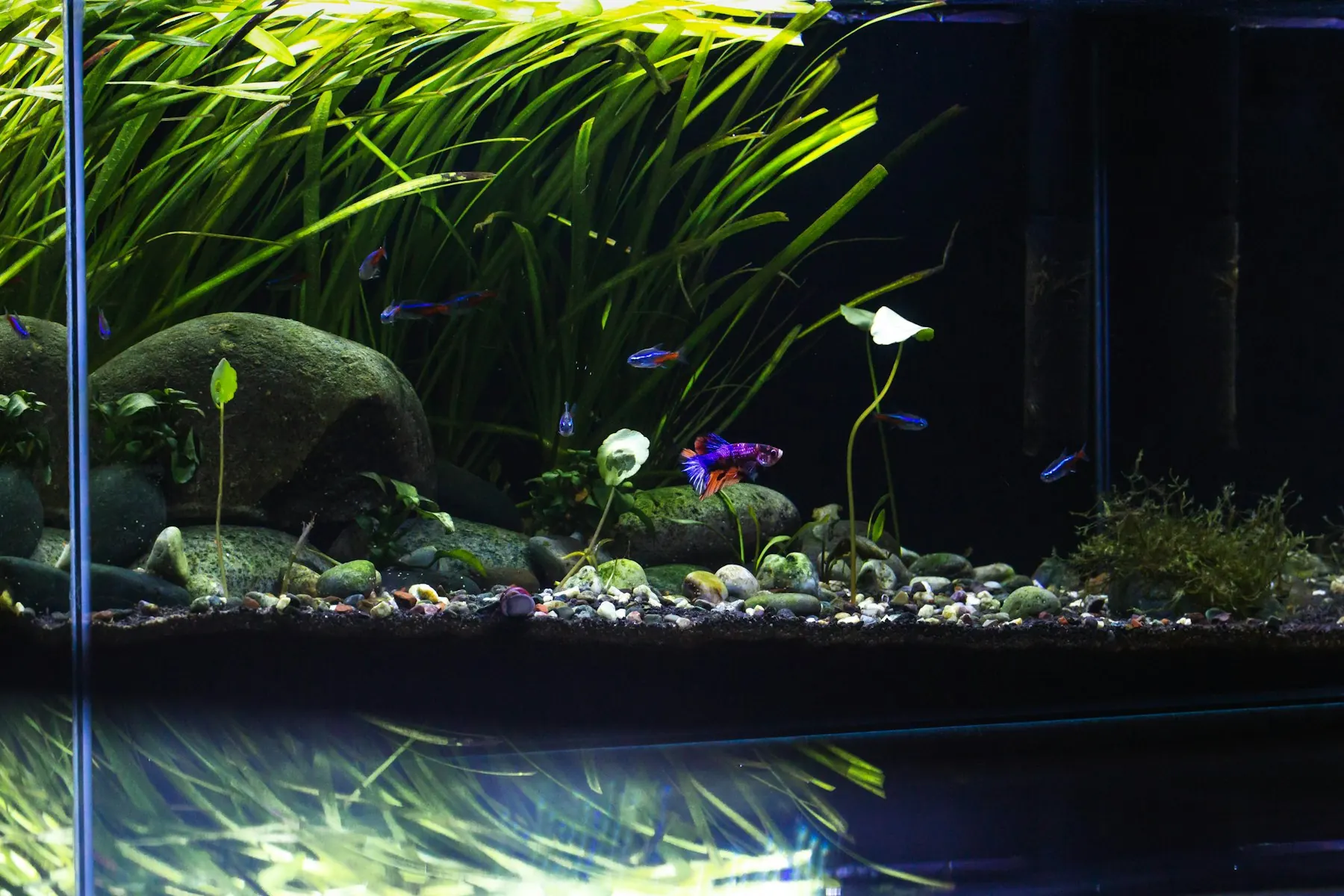
Stocking planner
Add the fish. Watch adult size in the glass. Read the flags before you pay. Copy a link.
Fish database
Adult size, tank minimum, temperature, pH, diet. The fish the shop will sell you, including the ones you should not buy.
Can they live together?
Temperament, water, and whether the angelfish will eat the shrimp. Check before the bag hits the counter.
Aquarium tools
Start with the stocking planner if you are buying fish. The rest are one job each. Formula on the page. Inputs stay on this device.
- Stocking plannerYou are asking how many fish fit — and whether they will live.
- Aquarium volumeYou have a tape measure and a box that claims to be 10 gallons.
- Fish compatibilityYou want to know if these fish can live together.
- Aquarium heaterThe kit heater is 50W and the tank sits on an exterior wall.
- Filter sizeYou are matching a hang-on-back or canister to tank gallons.
- Water changeIt is Sunday and you need the dose for 25%, not the whole tank.
- Tank dimensionsA listing is in cm, or you need to know if 60×30×36 cm is a 20 long.
- SubstrateYou are staring at 20-lb bags and a 2-inch target depth.
- Aquarium lightingYou want plants, not a 14-hour algae farm.
- CO₂The drop checker is green-ish and you want a number.
- FertilizerYou are mixing dry salts and do not want to guess the teaspoon.
Want a footprint turned into filter GPH, heater watts, and a 25% dose? Tank planner.
Who this is for
People standing in the fish aisle with a phone, or staring at a tank that went cloudy on Tuesday. You want a straight answer: tank size, tankmates, how often to change the water. Not a store, not a personality quiz, not ten pills labeled “pro tips.”
Order of operations: look up the fish, check they can live together, measure the glass, size the filter and heater, cycle, then livestock.
Who this is not for
- Reef and marine. We say so on the saltwater page instead of faking a tang list.
- Garden ponds. Koi in a 1000-gallon hole is not a 20 long.
- Anyone shopping from a fake “best filters” list.
- Mixing a betta, five danios, two angels, and a common pleco because they were in the same tank at the shop.
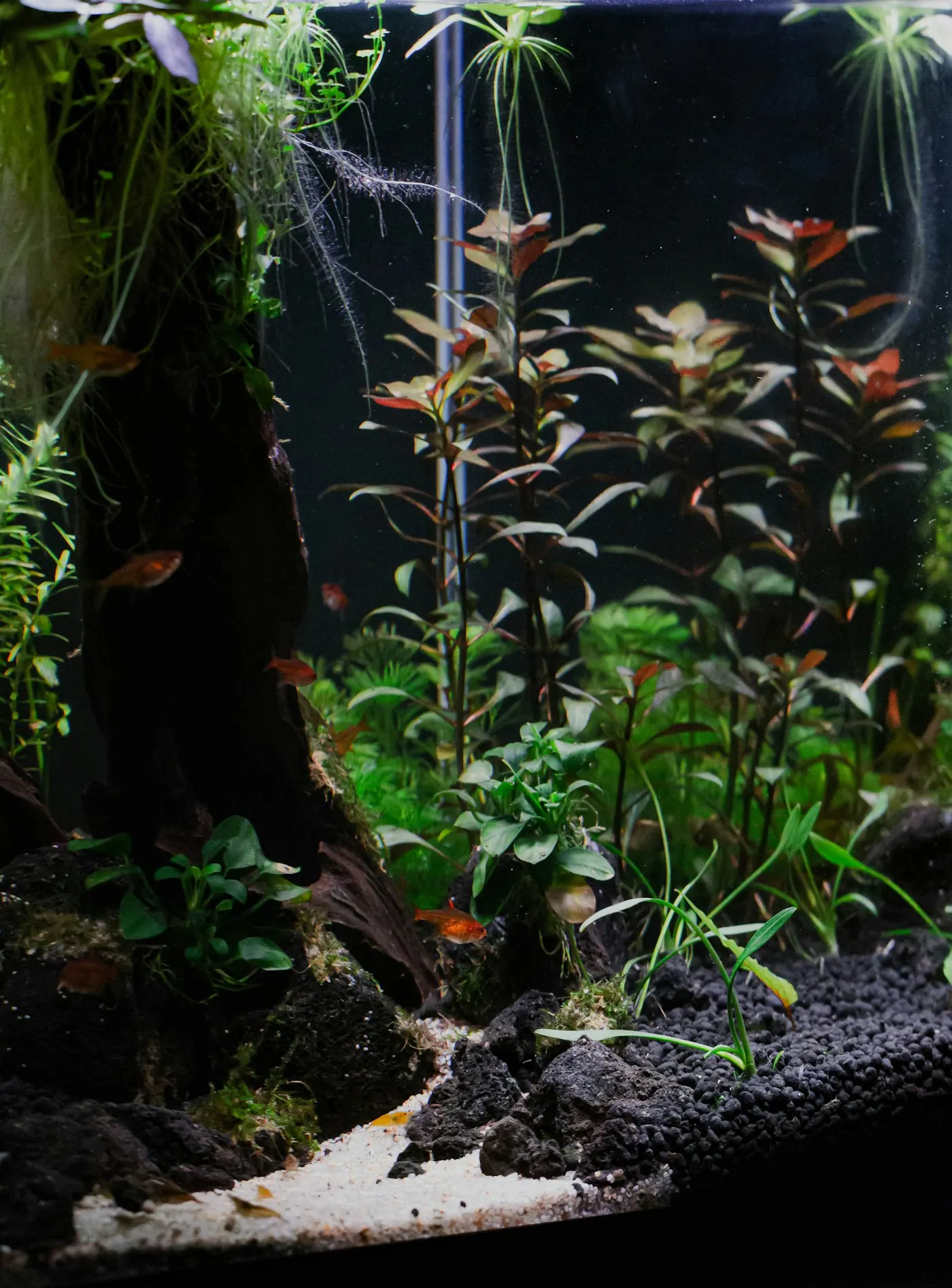
Fish you can look up
Profiles with the fields that actually matter when you are buying.
Freshwater fish
The list this site is actually built on.
Community fish
Fish that can share a planted tank without a war.
Beginner-friendly fish
Hardy, small, and honest about tank size.
Bottom feeders
The sand crew — not a substitute for a filter.
Schooling fish
Buy the group, or do not buy the fish.
Shrimp and snails
Invertebrates first, fish second.
Guides
Cycling a fish tank
Ammonia, then nitrite, then nitrate. Fish after both read zero.
Water parameters
What ammonia, nitrite, nitrate, pH, and GH actually mean in a home tank.
Cherry shrimp
Stable GH, no copper, and tankmates that will not hunt the colony.
Usual questions
- Can these fish live together?
- Check temperament, adult size, temperature, and pH — not the store tank photo. The compatibility checker flags aggression, parameter clashes, and fish that eat shrimp.
- How many fish can I keep in a 20 gallon tank?
- A 20 long with a decent hang-on-back can hold a tetra school of 10–12 plus six corydoras if you cycle first. A 20 high is worse for swimming. Inch-per-gallon is not the math — run stocking with adult sizes and real GPH.
- What size filter do I need?
- Community tanks want about 4–6× volume per hour of real flow. Manufacturer GPH is empty-filter bragging, so buy a unit rated roughly 1.5× that.
- What fish fit in a 10-gallon?
- One idea: a betta, a shrimp colony, or a small ember school. Not goldfish, not a common pleco, not eight species from the same rack.
- How often should I change the water?
- About 25% weekly on a stocked community. Goldfish want more. Dose conditioner for the gallons you add, not the whole tank. Top-offs are not water changes.